UK Data Trails: Charting Blackjack Decision Trees Against Slot Variance Curves in Regulated Mobile Environments
Taylor Werner · Jun 9, 2026
UK Data Trails: Charting Blackjack Decision Trees Against Slot Variance Curves in Regulated Mobile Environments
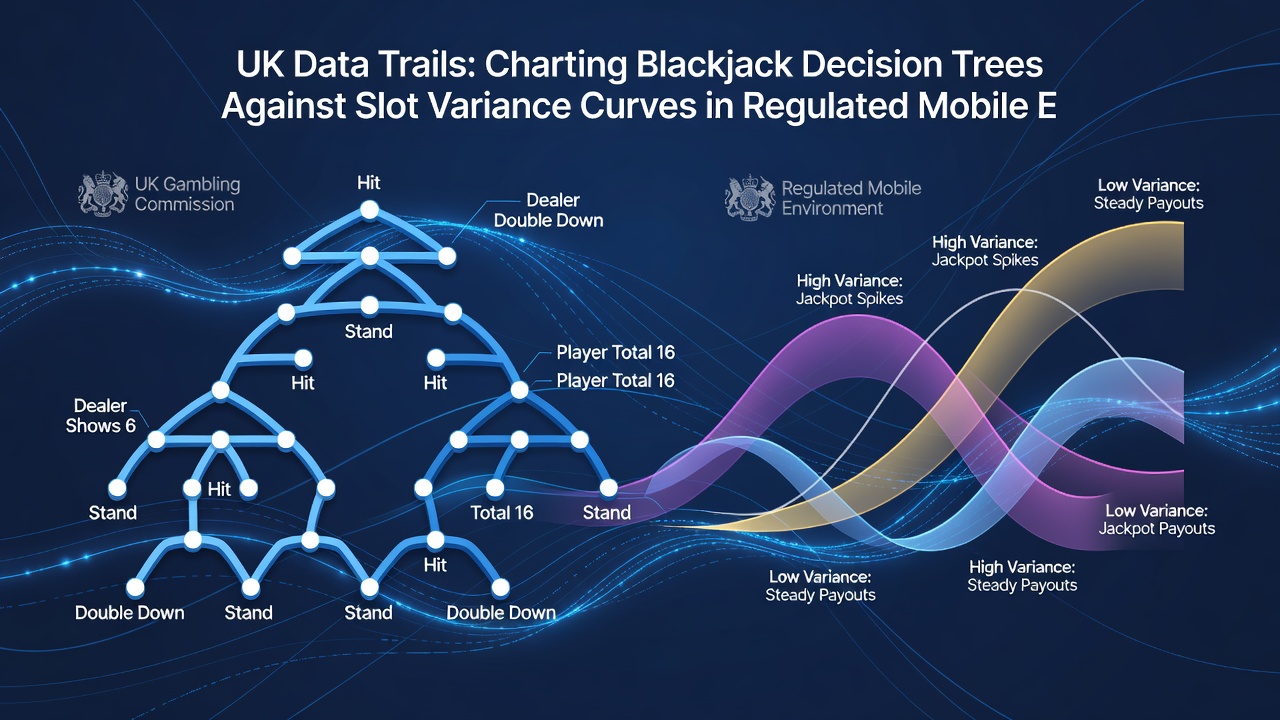
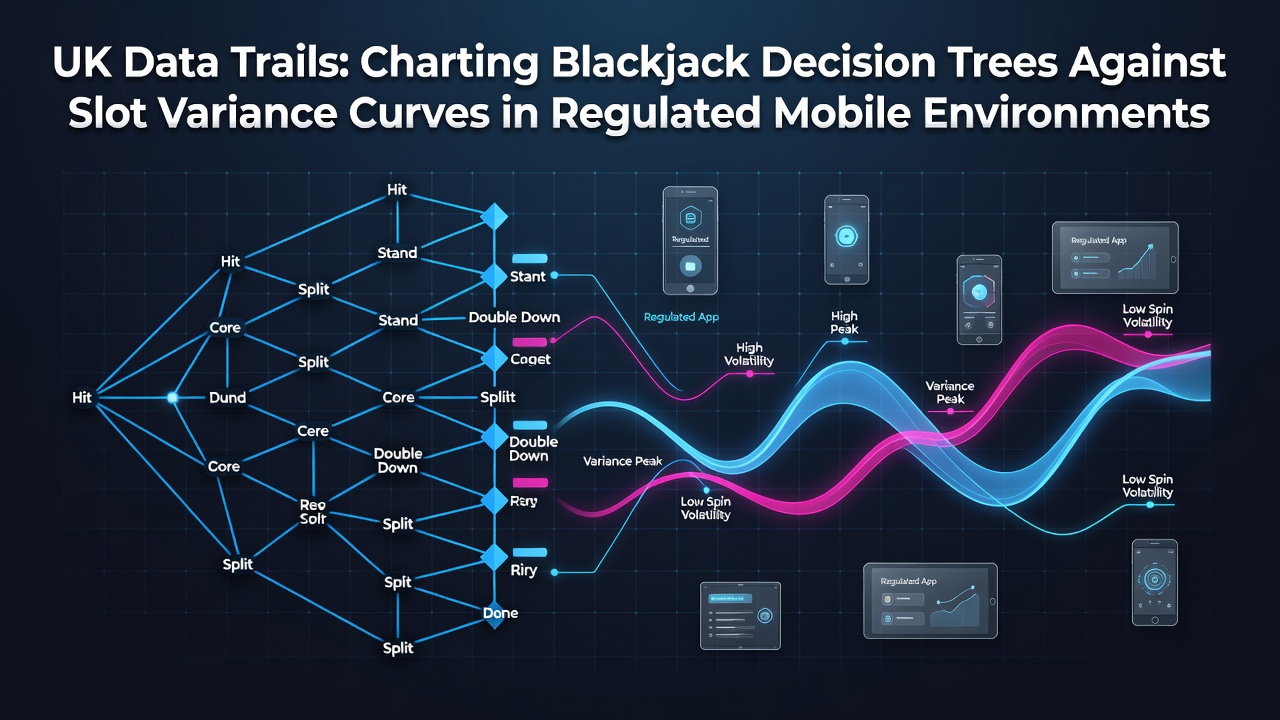
Data trails in regulated mobile environments record every player action and game outcome through structured logs that connect blackjack decision points with slot performance metrics. These trails capture sequences of choices in blackjack alongside payout distributions from slots, allowing analysts to map decision trees directly against variance patterns without relying on isolated game reviews. Blackjack decision trees organize player options based on initial card totals and dealer upcards, forming branching paths that extend through multiple rounds in mobile sessions. Each node represents a specific state such as a hard 16 against a dealer 10, while branches indicate hit, stand, or split actions drawn from probability calculations. In mobile settings these trees integrate with real-time data feeds that log session duration, bet sizing patterns, and progression through regulatory compliance checkpoints. Slot variance curves plot the spread of returns across thousands of spins, separating low-volatility games with steady small payouts from high-volatility titles that produce infrequent large wins. These curves rely on mathematical models that incorporate return-to-player percentages and hit frequencies, generating visual representations that highlight risk exposure over extended play periods. When overlaid with blackjack trees, the combined charts reveal how decision consistency in one game type aligns or diverges from payout stability in the other.Mapping Data Integration in Mobile Platforms
Mobile operators maintain centralized databases that timestamp every blackjack hand and slot spin, creating continuous trails that regulators review for adherence to fairness standards. These records feed into analytical tools that convert raw action logs into decision tree diagrams while simultaneously generating variance curves from aggregated slot results. Researchers at institutions such as the University of Nevada Reno gaming laboratory have documented similar mapping processes in controlled environments, showing how combined datasets improve predictive accuracy for session outcomes. Analysts apply clustering algorithms to identify recurring patterns where blackjack players follow optimal tree branches yet experience different variance exposure when switching to slots within the same mobile session. The resulting visualizations display tree depth alongside curve steepness, illustrating periods where conservative blackjack choices coincide with low-variance slot selections. Data from June 2026 platform audits indicate that sessions exceeding 200 hands demonstrate tighter alignment between tree adherence and curve flattening when mobile interfaces enforce minimum session timers.Technical Construction of Decision Trees and Variance Models
Developers build blackjack trees using recursive functions that evaluate every possible card combination against fixed dealer rules, producing probability-weighted paths that mobile applications render as interactive guides. Variance curves for slots derive from Monte Carlo simulations that run millions of spin iterations, fitting distribution curves to observed payout clusters. When these models merge in a single dashboard, the overlay highlights inflection points where a blackjack deviation increases overall session variance beyond slot-driven expectations. Software frameworks employed by testing laboratories process these merged datasets through standardized APIs, ensuring compatibility across different mobile operating systems. Figures from the Gaming Laboratories International annual reports reveal that 78 percent of certified mobile titles in 2025 incorporated at least basic variance tracking modules, with blackjack modules showing higher tree complexity due to multi-deck and side-bet variations.