UK Authority Certification Processes Governing Algorithmic Fairness in Licensed Digital Wagering Platforms
Taylor Werner · Jul 19, 2026
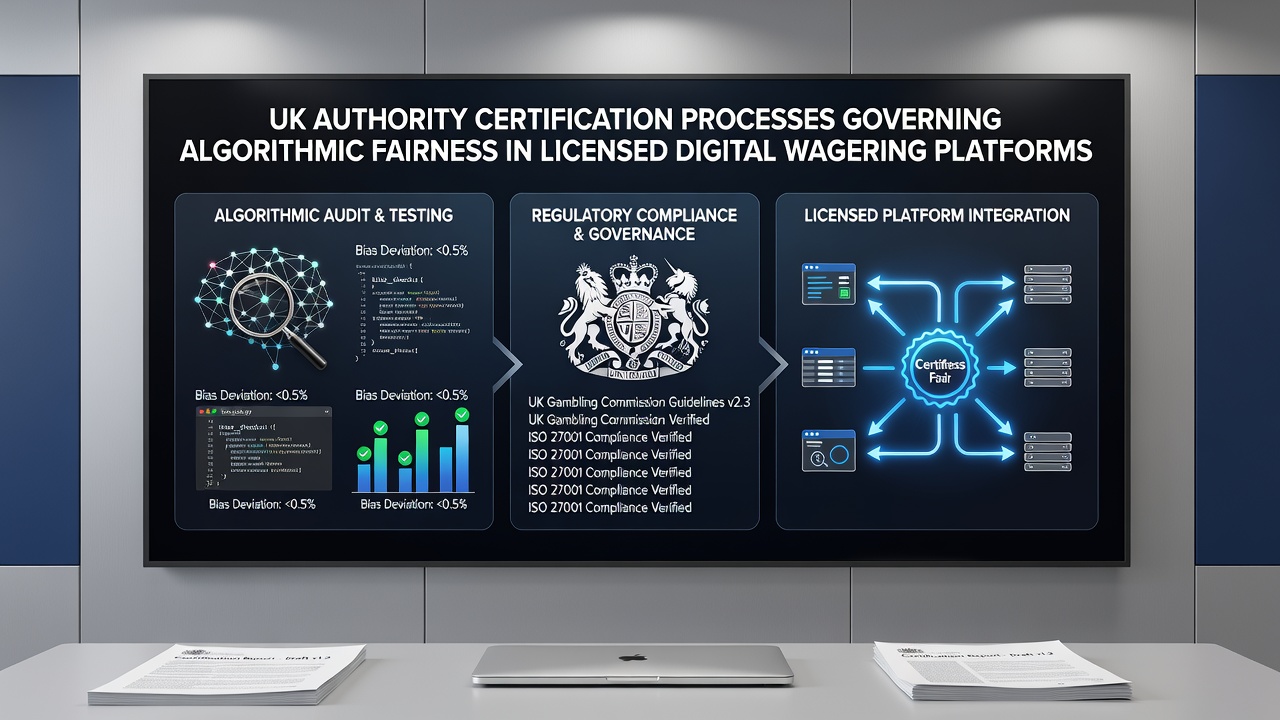
UK Authority Certification Processes Governing Algorithmic Fairness in Licensed Digital Wagering Platforms
UK authorities maintain structured certification pathways that assess algorithmic components within licensed digital wagering platforms, and these pathways focus on preventing bias in random number generators, outcome prediction models, and personalized recommendation engines. Operators submit detailed documentation that outlines model architecture, training datasets, and decision logic before any system deployment reaches live environments. Accredited testing laboratories then conduct independent evaluations that verify compliance with predefined fairness metrics, and this process incorporates statistical sampling alongside adversarial testing to expose potential disparities across user demographics.
Core Components of the Certification Framework
Certification requires demonstration that algorithms treat all player segments equitably while preserving game integrity, and laboratories examine variables such as payout distributions, bet acceptance rates, and bonus allocation patterns to confirm absence of discriminatory weighting. Documentation standards mandate disclosure of feature importance rankings within machine learning models, which allows auditors to trace how inputs influence outputs without exposing proprietary code. Ongoing monitoring obligations extend beyond initial approval because platforms must report material changes to algorithmic logic within specified timeframes, and failure to notify triggers re-evaluation cycles.
Independent Audit and Validation Procedures
Approved bodies perform both static code reviews and dynamic runtime simulations that replicate high-volume transaction scenarios, and these exercises measure deviation rates against benchmark fairness thresholds established through regulatory guidance. Researchers at institutions such as those affiliated with the Privy Council Office of Canada have published comparative analyses of similar validation techniques applied across international jurisdictions, and their findings highlight consistent emphasis on transparency in data provenance. Platforms integrate logging mechanisms that capture every algorithmic decision point, enabling post-certification audits to reconstruct sequences when anomalies surface during operational reviews.
Integration of Emerging Standards Around July 2026
By July 2026 several harmonized testing protocols are scheduled to take effect across UK regulated markets, and these updates align fairness assessment criteria more closely with international benchmarks for artificial intelligence governance. Laboratories will incorporate expanded test suites that evaluate reinforcement learning agents used in dynamic odds adjustment, and certification timelines are expected to lengthen slightly because additional documentation layers become mandatory. Operators who already maintain modular algorithm designs report smoother transitions during pilot audits, since isolated components can undergo targeted revalidation without full system recertification.

Documentation and Reporting Obligations
Each certified platform maintains a living compliance dossier that records version histories, retraining events, and performance drift indicators, and regulators require quarterly summaries that aggregate fairness statistics across all active user cohorts. Industry associations such as the European Gaming and Betting Association compile anonymized aggregate data that demonstrates sector-wide adherence rates, and these reports serve as reference points during individual operator reviews. When anomalies exceed tolerance bands, platforms initiate remediation plans that include model retraining or feature removal, followed by supplementary laboratory confirmation before returning to production status.
Cross-Jurisdictional Comparisons and Data Sources
Observers note parallels between UK procedures and frameworks administered by bodies such as the Australian Communications and Media Authority, where algorithmic audits similarly prioritize outcome equity across diverse populations. Academic studies released through university repositories, including work from the University of Melbourne's Centre for AI and Digital Ethics, provide empirical evidence on effective bias detection methods that UK laboratories have begun incorporating into their standard operating procedures. These cross-references strengthen validation robustness without duplicating effort across regulatory regimes.
Conclusion
Certification processes continue evolving to address increasingly sophisticated algorithmic deployments within licensed digital wagering environments, and the combination of initial validation, continuous monitoring, and scheduled standard updates supports consistent fairness outcomes. Stakeholders who track July 2026 developments will observe further refinement of testing methodologies that reflect both technological advances and accumulated operational data from prior certification cycles.