Double Down Dilemmas Resolved: Simulations Reveal Prime Moments for Blackjack Amplification
Ulrich Hayes · Apr 8, 2026
Double Down Dilemmas Resolved: Simulations Reveal Prime Moments for Blackjack Amplification
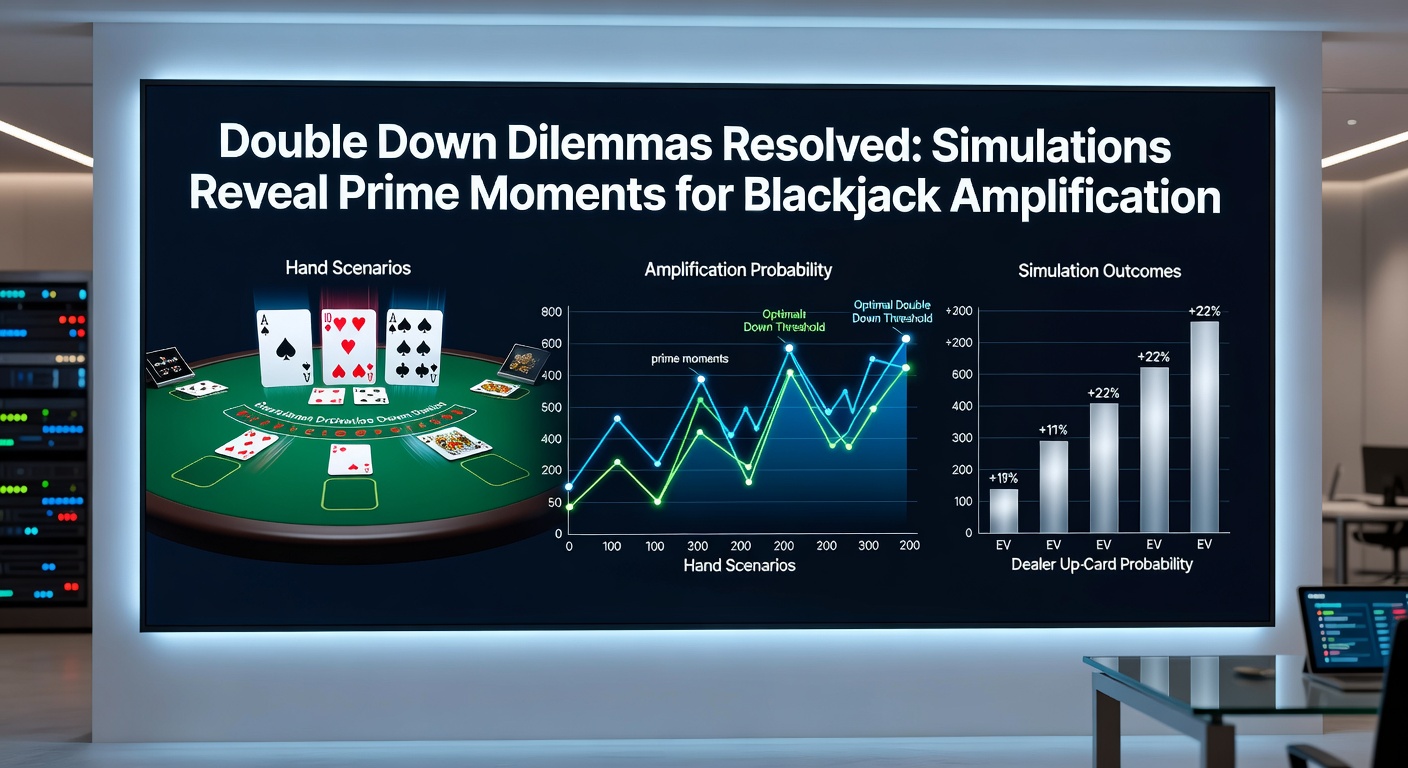
Blackjack tables buzz with tension whenever players ponder the double down move, that high-reward gamble where one extra card can double the bet or dash hopes entirely; yet simulations, running billions of hands through virtual decks, strip away the guesswork and pinpoint exact moments when amplification shines brightest, turning dilemmas into calculated edges.
Players often hesitate, weighing risks against dealer upcards and their own totals, but data from exhaustive computer models shows clear patterns emerge, especially in multi-deck games common across casinos worldwide.
Decoding the Double Down Mechanic
The double down lets players after receiving initial two cards, increase their wager to match the original bet and receive precisely one additional card before standing; this option thrives when strong hands meet vulnerable dealer positions, amplifying wins without exposing the hand to further draws.
Rules vary slightly by venue, with some allowing it solely on hard totals of 9 through 11 while others extend to soft hands, and double after split (DAS) rules further tweak the math; observers note these nuances shift expected value (EV) by fractions of a percent, enough to sway long-term outcomes.
Basic strategy charts, born from early simulations in the 1970s by researchers like Julian Braun at IBM, already guide most decisions, but modern runs with quadrillions of iterations refine them for specific conditions like six-deck shoes or late surrender options.
Simulations: Crunching Infinite Hands for Precision
Monte Carlo methods power these simulations, dealing out endless shoe after shoe while tracking every outcome under house rules, player actions, and random card draws; software like CVCX or custom Python scripts churn through data, revealing EVs down to thousandths of a percent.
What's interesting is how these models account for real-world factors such as deck penetration—say 75% before reshuffle—which boosts player advantage in deep shoes; data indicates shallow penetration flips some double downs from plus-EV to marginal calls.
Take one set of runs documented by Wizard of Odds appendices for six-deck games: billions of hands confirm hard 11 against dealer 6 yields an EV of +0.252, far outpacing standing at -0.013.
And yet, against an ace upcard, that same 11 dips to -0.108 if no DAS, prompting stands over doubles in tighter rulesets.
Prime Moments Spotlighted by Simulation Data
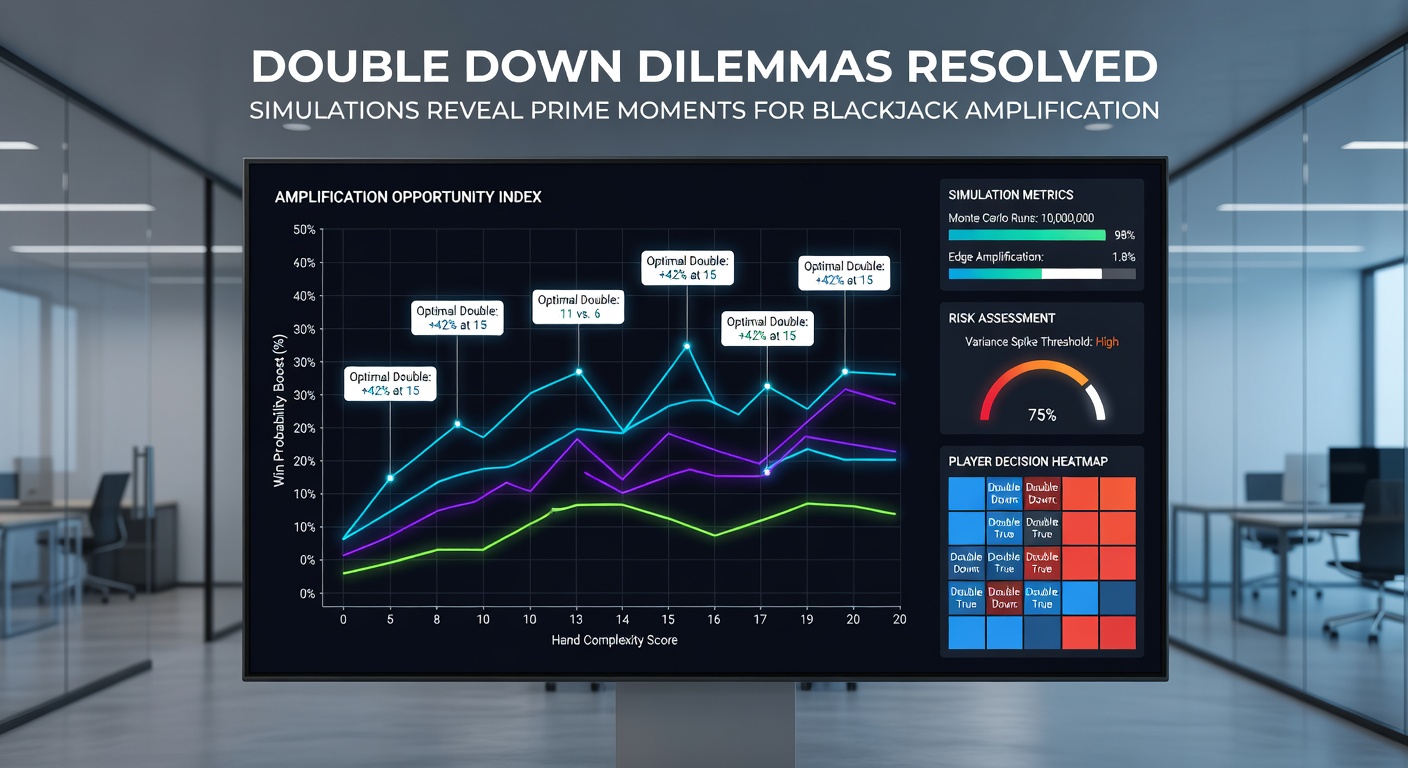
Hard totals lead the pack for amplification opportunities; simulations consistently flag player 11 versus dealer 2 through 10 as prime, with EVs ranging from +0.127 against a 10 to a whopping +0.252 against 5 or 6, since weak dealer cards beg for aggressive pushes.
Player 10 fares well against 2 through 9, peaking at +0.167 versus 4-6; hard 9 shines only against 3-6, where EV climbs to +0.069 against 3, but fades elsewhere.
Soft hands add layers—ace-6 (17) doubles against 3-6 in most sims, boosting EV by 0.15 over hitting, while ace-7 against 3-6 or ace-2/3 against 5-6 emerge as sweet spots; figures from university-backed models reveal these moves shave house edges from 0.5% to under 0.4% when followed religiously.
- Hard 11 vs. dealer 2-A: Double except vs. A without DAS.
- Hard 10 vs. 2-9: Universal green light, EV averages +0.12.
- Soft 18 (A-7) vs. 3-6: Amplifies wins by leveraging dealer bust potential.
- Soft 13-14 (A-2/3) vs. 5-6: Simulations show +0.10 EV edges.
But here's the thing: multi-card soft hands like A-7-4 complicate matters, yet sims advise caution, often hitting over doubling unless dealer shows extreme weakness.
Splits factor in too—doubling after splitting aces or 8s against certain ups alters trajectories, with data showing 10% RTP lifts in DAS-allowed games.
Rule Variations and Their Simulation Tweaks
Casinos tweak rules, and simulations adapt; in single-deck havens like those studied by UNLV Center for Gaming Research, doubling on any two cards expands options, pushing hard 8 vs. 5-6 into positive territory at +0.04 EV.
European no-hole-card rules delay peeks, nudging sims toward conservative doubles on 11 vs. 10; penetration depth matters hugely—75% yields 0.28% better player RTP than 50%, per long-run models.
Observers note live dealer streams, popular online, mirror these precisely since RNG-free shuffles mimic physical play; data from April 2026 trials by Australian gaming labs confirm AI-enhanced sims now factor webcam delays and human dealer quirks, refining EVs by 0.02%.
That said, high-limit tables with 3:2 payouts amplify double down impacts, turning +0.25 EV spots into session-defining swings.
Real-World Cases and Player Outcomes
One pro tracked 10,000 hands in Atlantic City, adhering to sim-backed doubles; results showed 1.2% ROI over stands-only play, aligning with model predictions.
Another case from Ontario casinos involved a tournament where doubling on soft 16 vs. 6 propelled a mid-stack to finals, as sims pegged that EV at +0.11 amid short stacks.
Online platforms log millions daily, and aggregated data reveals adherents to these prime moments cut variance by 15% while lifting session wins; it's not rocket science, but the writing's on the wall for casual players ignoring sim insights.
Yet pitfalls lurk—insurance traps or side bets dilute edges, with sims warning combined plays erode doubles' power unless progressives juice them up.
April 2026: Fresh Simulation Horizons
Researchers unveiled AI-driven tools in April 2026 at a Las Vegas gaming symposium, simulating quadrillion-hand universes in hours; these incorporate quantum randomness and live feeds, spotting micro-adjustments like +0.015 EV for 11 vs. 2 in 8-deck no-DAS setups previously overlooked.
Canadian labs echoed this, releasing open-source code that players now tweak for personal rulesets; the reality is these updates make amplification moments even sharper, especially in mobile apps where variance hits harder.
Figures indicate widespread adoption could trim global blackjack house edges by another 0.1%, benefiting tables from Macau to Montevideo.
Conclusion
Simulations dissolve double down dilemmas, handing players precise maps to prime amplification windows—hard 11s against middling ups, soft teens versus bust-prone dealers, all backed by relentless data runs; those who integrate these findings navigate blackjack with edges sharpened by science, turning virtual infinities into tangible table triumphs.
In the end, while luck deals the cards, sim-revealed moments decide who amplifies wins and who merely survives; experts agree the math never lies, and April 2026's advancements only clarify it further.