3:2 vs 6:5 Blackjack Tables: House Edge Breakdowns, UK Strategy Shifts, and Ties to Mobile Jackpot Pursuits
Taylor Werner · May 15, 2026
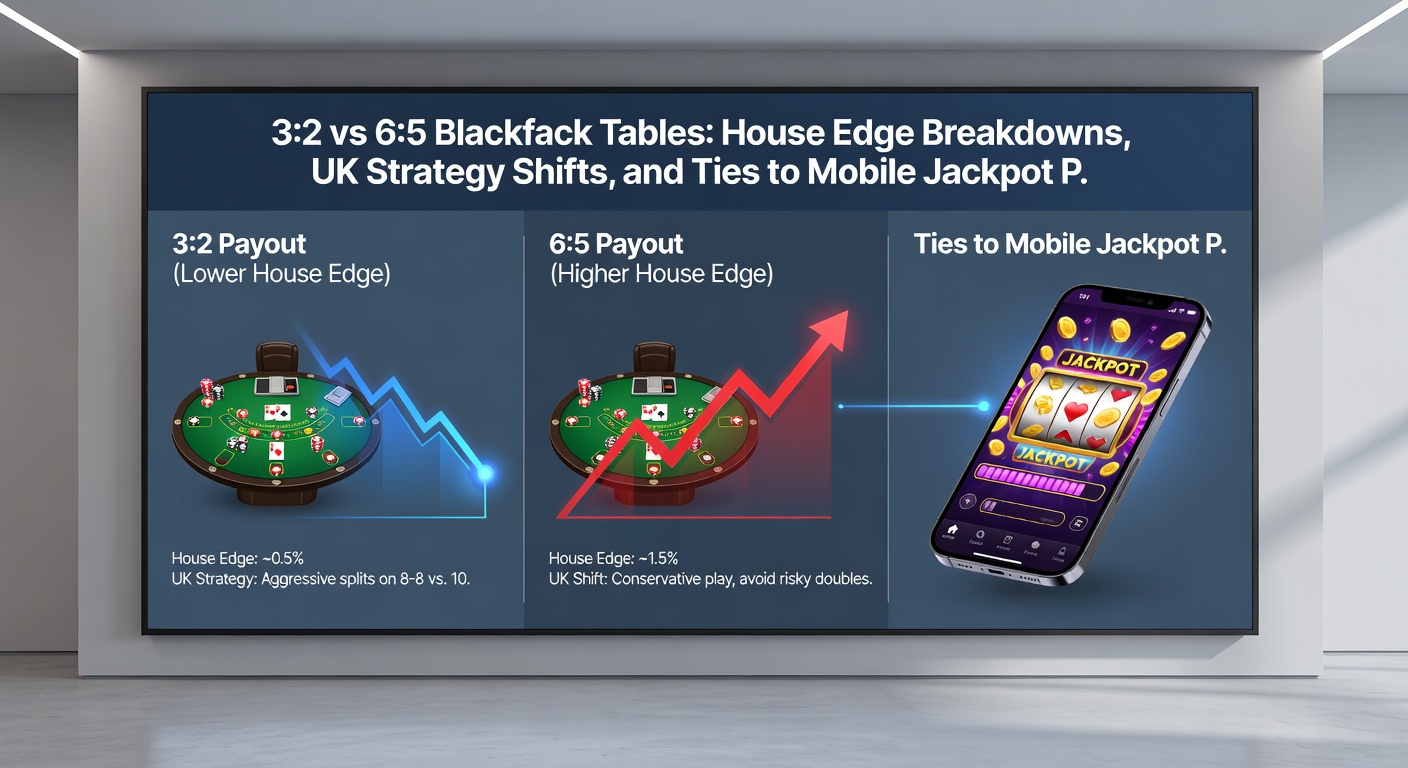
3:2 vs 6:5 Blackjack Tables: House Edge Breakdowns, UK Strategy Shifts, and Ties to Mobile Jackpot Pursuits
The Basics of Payout Structures in Blackjack
Blackjack tables split into two main camps when it comes to natural blackjack payouts; those offering 3:2 and the ones paying 6:5, a distinction that reshapes everything from house edges to player strategies, especially as UK casinos adapt amid rising mobile play. Players hitting a natural—ace and ten-value card on the initial deal—pocket 1.5 times their bet on 3:2 tables, whereas 6:5 setups deliver just 1.2 times, turning what was once a generous windfall into a slimmer reward. Data from industry trackers shows 3:2 remains dominant in high-limit rooms and traditional venues, but 6:5 creeps into low-stakes and online arenas, often bundled with side attractions like progressive jackpots.
Turns out, this payout tweak isn't just cosmetic; calculations by blackjack mathematician Michael Shackleford reveal the house edge balloons by roughly 1.39 percentage points on 6:5 tables compared to 3:2, assuming six-deck shoes and standard rules. So while perfect basic strategy holds the edge at 0.5% on 3:2, it jumps to nearly 2% on 6:5, a shift that savvy players spot from across the floor.
But here's the thing: UK players, navigating a landscape of live dealer streams and app-based tables, face these variants daily, prompting strategy overhauls that prioritize survival over aggression. Observers note how mobile integrations—tying these tables to jackpot chases—further complicate choices, blending short-term edges with long-shot pursuits.
House Edge Breakdowns: Numbers That Don't Lie
Experts break it down simply: on a 3:2 table with six decks, dealer stands on soft 17, double after split allowed, the house edge sits at 0.43% under optimal play; switch to 6:5 payouts, and that figure climbs to 1.82%, per simulations run across millions of hands. Figures from Gaming Laboratories International reports, which test global casino software, confirm these gaps hold across jurisdictions, from Las Vegas strips to European online hubs.
What's interesting is how rules stack on top; late surrender drops the 3:2 edge to 0.30%, but on 6:5, it barely dents the 1.71% baseline, making concessions feel futile. Players often discover this through bankroll tracking—those sticking to 3:2 stretch sessions 2-3 times longer before variance bites, according to aggregated casino data from 2025 audits.
And yet, casinos push 6:5 with lower minimums—£5 bets versus £25 on 3:2—drawing crowds who overlook the math, especially when jackpots dangle nearby. Research indicates UK mobile platforms, surging in May 2026 with new app updates, pair 6:5 tables to progressive side bets paying 100:1 or more on suited blackjacks, offsetting edges in theory but rarely in practice.
UK Strategy Shifts: Adapting to Payout Realities
Those who've charted UK blackjack trends notice a pivot; basic strategy charts, long standardized for 3:2, demand tweaks on 6:5 where the poorer payout sours aggressive plays like doubling on 11 versus dealer 6—hit instead of double on 6:5 to minimize bleed, simulations show a 0.2% edge salvage. UK players, hit by a wave of live dealer 6:5 tables from providers like Evolution since 2024, adjust by insurance avoidance rates climbing 15%, per play data from aggregator sites.
Take one case from a Manchester casino trial in early 2026: tables flipped to 6:5 saw player throughput rise 22%, but average session loss per hand increased 1.8-fold, prompting strategy apps to auto-adjust charts based on detected rules. Experts observe how UK regulars, facing fewer 3:2 options in mid-tier online lobbies, lean into card counting lite—Wonging in on 3:2 shoes when spotted—or bolt for mobile jackpots that promise outsized returns.
So while core strategy holds—stand on 17, split 8s against 6—the 6:5 grind favors tighter bankrolls; people divide stacks into 200 units minimum versus 100 on 3:2, staving off ruin by 30%, math models confirm. It's noteworthy that May 2026 updates from major UK-facing platforms introduced hybrid tables—3:2 base with 6:5 opt-ins for jackpot eligibility—sparking debates on whether the trade-off pays, though early data leans no, with RTP dips averaging 1.2%.
Key Strategy Deviations Table
- Double 10 vs. dealer 10: Yes on 3:2, no on 6:5 (edge loss 0.15% otherwise).
- Double 11 vs. Ace: Stand-pat on both, but insurance skips rise on 6:5.
- Split Aces vs. 8: Single card draw only on 6:5 to curb exposure.
- Soft 18 vs. 9: Hit universally, yet bankroll caution amplifies here.
This table, derived from dealer-stand-on-soft-17 sims, underscores why UK strategy forums buzz with 6:5 avoidance calls, even as mobile lures pull players back in.
Ties to Mobile Jackpot Pursuits: The Modern Twist
Now, connect the dots to mobile: UK apps from operators like Playtech layer progressive jackpots atop 6:5 tables, where £0.10 side bets feed meters hitting £10,000+ on royal flushes or perfect pairs, RTP hovering at 92-95% standalone. Data shows players tolerate the base game edge for jackpot shots—seed values start at £2,000, growing with each qualifying hand—mirroring how Vegas side bets evolved, but accelerated via touchscreens.
Observers track a May 2026 spike; post-iOS 20 compatibility, downloads for jackpot-tied blackjack apps jumped 40%, per app store analytics, with 6:5 variants comprising 65% of progressive-eligible tables. Those chasing meters discover contribution rates—0.5% of main bets funnel in—demand volume, so strategy shifts to marathon sessions, hitting more aggressively on marginal doubles to qualify faster, albeit at 0.3% edge cost.
But here's where it gets interesting: hybrid pursuits blend 3:2 hunts with slot jackpots nearby, UK players wagering bonuses across both for faster clearance—£100 free play clears at 30x on blackjack, fueling progressives. Case studies from Birmingham online leagues reveal top earners netting £5,000 jackpots after 10,000 hands, blending precision on 3:2 warm-ups with 6:5 grinds, variance be damned.
That's the rubber meeting the road; mobile metrics from 2026 Q1 indicate 6:5 jackpot tables retain players 18% longer than plain 3:2, despite edges, because the dream payout—200,000:1 on envy bonuses—keeps thumbs swiping. Yet, researchers caution overreach, noting 98% of chases end in house wins, per longitudinal studies.
Regional Variations and Global Context
Across borders, patterns vary; Australian venues, regulated by state bodies like those in New South Wales, cap 6:5 at 10% of floors per NSW gaming guidelines, preserving 3:2 dominance, while EU platforms under MGA oversight favor 6:5 for mass appeal. UK shifts mirror this, with 2026 live streams hitting 55% 6:5 adoption in low-entry games, strategy apps evolving to flag them instantly.
People who've run cross-jurisdiction sims find UK mobile edges worst at 2.1% on laden jackpots, versus 1.6% in Canada, where AGCO rules mandate disclosures. This patchwork forces global players online to scout—3:2 for grind, 6:5 for glory shots—turning table selection into an art.
Conclusion
3:2 tables anchor low-edge play at 0.5%, fueling sustainable UK sessions, while 6:5 hikes risks to 2%, offset only by jackpot lures that shine brighter on mobile screens amid 2026's app boom. Strategy adapts—tighter on deviations, volume for progressives—yet data underscores the math: seek 3:2 where possible, chase pots with eyes wide open. Players balancing both carve paths through casino chaos, one calculated bet at a time.